

Weekend Beacon: A House Divided
Also: The Russians never stopped spying, Ruth Wisse was right, 'The Odyssey' finds a home in our critic's heart, and 'Blue Velvet' is still a gas.


July 25 - 26, 2026

The House of Representatives just wrapped up another whirlwind session with Republicans clinging to their razor-thin majority and bracing for a heady midterm. What else is new? New Weekend Beacon contributor Jason Willick reviews Glory, Grief, and the Gavel: An Inside Guide to Running for Speaker of the House by John Leganski.

“One theme in Leganski’s account is that the Freedom Caucus is held to a different standard in negotiations than the rest of the GOP coalition. They could ‘sling arrows and issue ultimatums, but the second a different corner of the conference did so, they cried foul.’ The populist and right-wing members advocated for a rule saying that only bills with support from the majority of the majority could go to the floor—but were also willing to hold the majority of the GOP ‘captive to a small minority’ in the race for speaker.
“It’s unimaginable that House Republican moderates would hold up the election of a speaker with the support of 90 percent of the conference. But rebellions from the right are seen as carrying a special kind of authenticity in the modern GOP—especially when the conservative movement feels under siege by a left-wing administration.
“Though McCarthy’s speakership lasted just 270 days—making his the shortest tenure as the U.S. government’s third-ranking official since the 1870s—it can’t be called a failure. He successfully rolled the Biden administration and Senate Democrats in debt limit negotiations, passing a major spending reduction in June.
“But Gaetz’s grudge against McCarthy hadn’t faded. He saw a chance to trigger a motion to vacate after legislation to avert a government shutdown split the conference in September. Gaetz’s real motivation, Leganski suggests, was ‘halting an ongoing bipartisan House Ethics Committee investigation into his alleged sexual conduct with a minor.’ The day before the vote to oust McCarthy, Gaetz submitted his legal response to the investigators.”

From political sneaks to sneaky spies, Tod Lindberg reviews Tradecraft, Tactics, and Dirty Tricks: Russian Intelligence and Putin's Secret War by Sean M. Wiswesser.
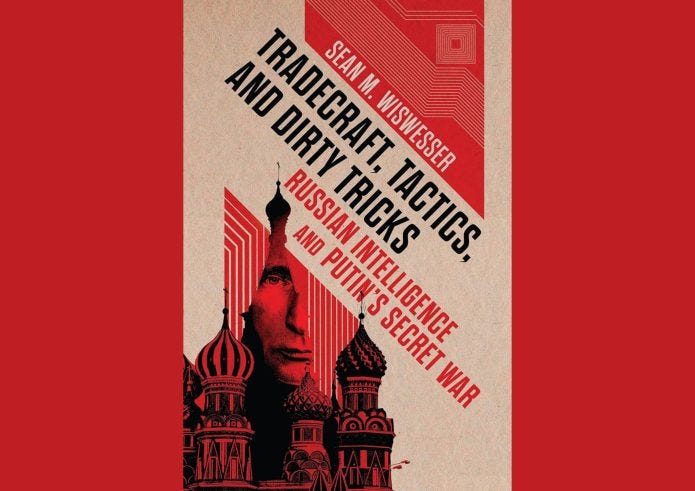
“Wiswesser’s book has a broader and more sobering message than its nuts-and-bolts depiction of the operations of Russian intelligence. He writes, ‘we are and have been in an undeclared war waged by their intelligence services and their corrupt government against the West for some time—we just don’t recognize it.’ What for many Americans was a benevolent post-Cold War era was for Russia a continuing confrontation with its ‘main enemy,’ as its intelligence officers described the United States during the Cold War and have continued to describe it since. As one of them told him: ‘Forget about the other threats; America comes first for us.’
“Vignettes about Russian spy ‘tradecraft’ and such make for entertaining reading, but Wiswesser’s purpose is not primarily to entertain. It’s to build awareness of just how serious a challenge Russia represents to the United States to this day. Apart, perhaps, from a short post-Cold War period under Boris Yeltsin, Russian intelligence has been at the forefront of what its strategists call ‘noncontact war’ against the United States and the West. A single Russian intelligence officer was directing two of the worst traitors in recent American history: the CIA’s Aldrich Ames, arrested in 1994, and the FBI’s Robert Hanssen, arrested in 2001. The activities of each led directly to the loss of lives of individuals secretly working for the United States.”
“Wiswesser draws a subtle portrait of his longtime antagonists in espionage. They are formidable in their way and often ruthless. But they have generic faults as well. The services are rife with corruption. It’s part of the expectation of officers that they will have ample opportunity to feather their nests. They are arrogant as a rule, and the more so the higher in rank they rise. They are often undisciplined in their spy tradecraft. Hanssen got nabbed because his handlers had him repeatedly use the same park for ‘dead drop’ communications. A perennial problem with ‘illegals’ is that they don’t much care for doing any spying, despite frequent exhortations from their masters. Their daily lives come to mean more to them than their covert allegiance.”

Speaking of betrayals, Tal Fortgang gives us a timely review of the recently reissued If I Am Not for Myself: The Liberal Betrayal of the Jews by Ruth R. Wisse.
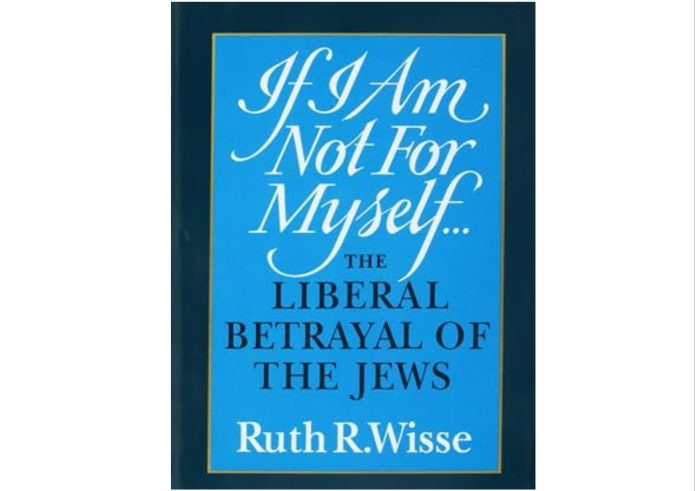
“Wisse ... pioneered the view that antisemitism could not be understood simply as a manifestation of bigotry. It is, rather, the orientation of ‘politics against the Jews.’ This, too, presaged the rise of political movements superficially belonging to left and right uniting over conspiracies about the role of ‘Zionists’ in American government. It also clarifies liberalism’s great shortcoming: While liberal universalism deftly wielded the language of brotherhood to mount courageous efforts against racism, sexism, and other hatreds, it could not conceptualize the politics Wisse now calls Antiism—a wholesale rejection of Westernism—because it seems irrational. Arresting the ‘negative ideology’ of Antiism would require something other than arguments about equality; the West had to ‘confront the aggressors with sufficient political, moral, and military resolve.’ Liberalism could only offer a politics of freedom, a morality of pluralism, and a reluctance to crush evil by force, if necessary. It relied upon too rosy a picture of human nature to acknowledge antisemitism for what it was: ‘the ultimate negative campaign, the ultimate challenge to liberal belief.’”
“Exposing an ideology’s weakness is only effective inasmuch as it can reach those who continue to cling to it. Wisse’s book takes its title from a millennia-old Jewish teaching: ‘If I am not for myself,’ asked the sage Hillel, ‘who will be for me?’ It is critical of liberals in the West but more so of Jews who have only internalized Hillel’s second teaching: ‘But if I am only for myself, what am I?’ They continue to stoke liberalism’s dying coals, putting their faith in social justice bona fides and ‘allyship,’ thinking that some combination of merit and sympathy for the Jewish plight can fend off the barbarians at the gate. Ever eager to speak the harsh truth, Wisse eviscerates Western liberal Jews who ‘sacrifice the Jews’—those militaristic Israelis—’to liberal pieties,’ not realizing they are actually stoking self-defeating politics.
“Those miscalculations should serve as a warning to the West, if it has the will to preserve its liberal heritage. One lesson, familiar to Wisse’s students, is not to indulge the ‘fantasy … that imparting information about the murder of the Jews of Europe will ensure its never happening again.’ Showcasing one’s own weakness does nothing to placate illiberal enemies. To the contrary, what to the West looks like ‘innocence’ appears more like an admission of guilt to those for whom violence is routine. ‘Something must be wrong with the Jews if they were selected as a target.’”

From a book of epic importance to a blockbuster epic, John Podhoretz reviews Christopher Nolan's much-anticipated The Odyssey.
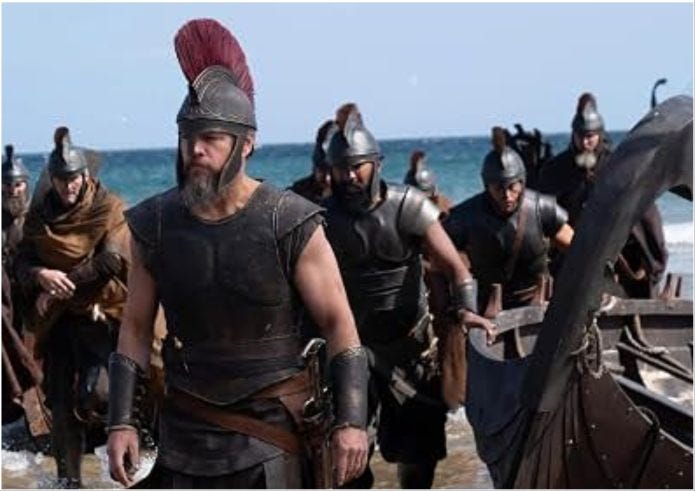
“As a movie, The Odyssey somehow manages to travel through dramatic genres as Odysseus travels the seas. Three amazing sequences are just straight horror. There’s a lot of straight-out seafaring adventure, along with some men-in-rooms conspiracy stuff. Moving love scenes with two of the most beautiful women on earth (Charlize Theron and Anne Hathaway) share space with action of every possible kind—from battles to John Wick-like hand-to-hand combat in which a lone man dispatches dozens.
“There isn’t a bad or even mediocre performance, and some are revelatory—among them, John Leguizamo as the faithful near-blind goatherd Eumaeus and Jon Bernthal as the surprisingly self-satisfied Menelaus, whose rage at his wife Helen’s cuckolding him with the son of the Trojan king was the inciting incident of the war. Tom Holland, best known as Spider-Man, gives us a Telemachus (Odysseus’ son) who makes a startlingly subtle journey from confused adolescence to the kind of manhood befitting one who deserves to wear a crown.
“Robert Pattinson continues to show he is one of the best actors of his age with a sensationally smarmy portrayal of Antinous, the Machiavellian suitor who leads the band of gangsters that take over Odysseus’ palace and refuse to leave until his wife Penelope marries one of them. Anne Hathaway, the recipient a decade ago of a really repulsive and entirely unwarranted degree of social-media hate, is unforgettable in her depiction of Penelope’s self-contained rage and grief.”
“The one quality Matt Damon lacks in his otherwise utterly commanding lead performance—a turn of astounding physicality and sheer presence that is the capstone of Damon’s career—is Odysseus’ impish cunning. That is not his fault. We know from his 30-year career onscreen that Damon is very good at garrulousness and spirited amusement. But Nolan isn’t. As was the case with his masterful Oppenheimer three years ago—another movie Nolan wrote and directed and for which he received the Oscar he will without a doubt win next year for The Odyssey—you must strain yourself to find a single moment of levity here.”

Shifting to an entirely different odyssey, James Rosen reviews David Lynch's classic voyeur-thriller Blue Velvet, as we continue our series on the greatest movies of 1986.
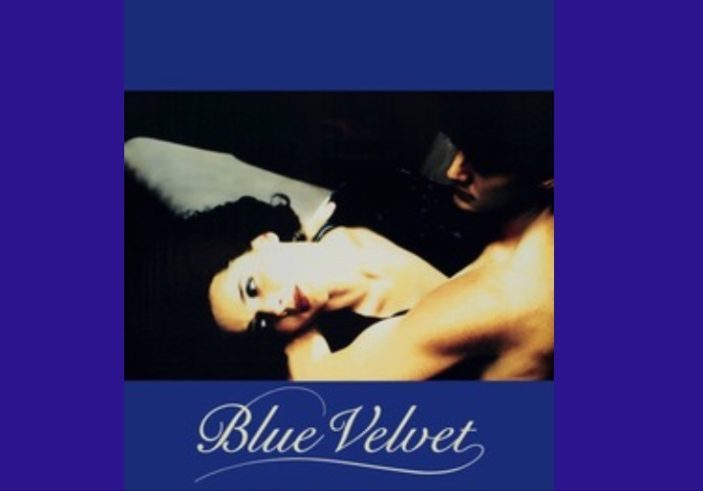
“As riveting and revolting as the day it was released, Blue Velvet chronicles the moral odyssey of Jeffrey, played by Kyle MacLachlan in his breakout role. The soft-spoken college student returns to his native Lumberton, North Carolina, a fictional setting based on Lynch’s hometown of Spokane, after Jeffrey’s father, proprietor of a classically American hardware store, suffers a stroke.
“Walking in a field, Jeffrey discovers a severed human ear. He takes the appendage to an upright detective he knows and finds himself enchanted with the detective’s daughter, Sandy, played by Laura Dern in her breakout role. At this early stage, the two share an earnestness—Jeffrey delights Sandy with his corny ‘chicken walk,’ a crouched strut performed with flapping elbows—that had all but vanished from teenage life by the mid-1980s.
“Indeed, in Lynch’s vision, Lumberton straddles the harsh realities of modernity and an earlier, more innocent time. Sandy dresses like a pre-Beatles bobbysoxer; Jeffrey drives a vintage convertible; the town bears little sign of currency, with no video arcades or Reagan posters in sight; and the soundtrack repeatedly reverts to Bobby Vinton’s version of the title song, which hit #1 in 1963, and to Roy Orbison’s ‘In Dreams,’ which reached #7 the same year. These time-bending features only deepen the dreamlike quality to Lynch’s storytelling.
“Thirsty for adventure, Jeffrey pumps Sandy for information from her father about the severed ear and learns it has something to do with a beautiful but troubled lounge singer, played by Isabella Rosselini in her breakout role, named Dorothy Vallens. The two teens scheme for Jeffrey to visit her apartment, painted in reddish hues suggestive of hell, under a daytime pretext. He snatches a key and returns as a nighttime snooper—and that’s when things get really weird.”

Happy Sunday.
Vic Matus
Arts & Culture Editor
Washington Free Beacon
So Russia’s secret war against us never ended. Did our secret war against them end? Did we actually extend a hand of friendship?
And yes they do have a corrupt government. We’re better but not much better. Look at what we learned over the past 10 years. Our judges, elected politicians running on destroy America platform. Others working for China or Iran. We are one small step behind Russia, propped up by about 100 brilliant, hard working people who keep us solvent and still somehow in the lead.