


September 19 - 20, 2026

As we approach the third anniversary of the October 7 attacks, it is vital for both Israelis and Americans to understand what led to this point and how that war was successfully prosecuted. Eugene Kontorovich reviews In the War Room: The Inside Story of Israel’s Fight Against Hamas and the Iranian Axis by Yonah Jeremy Bob and Elliot Kaufman.
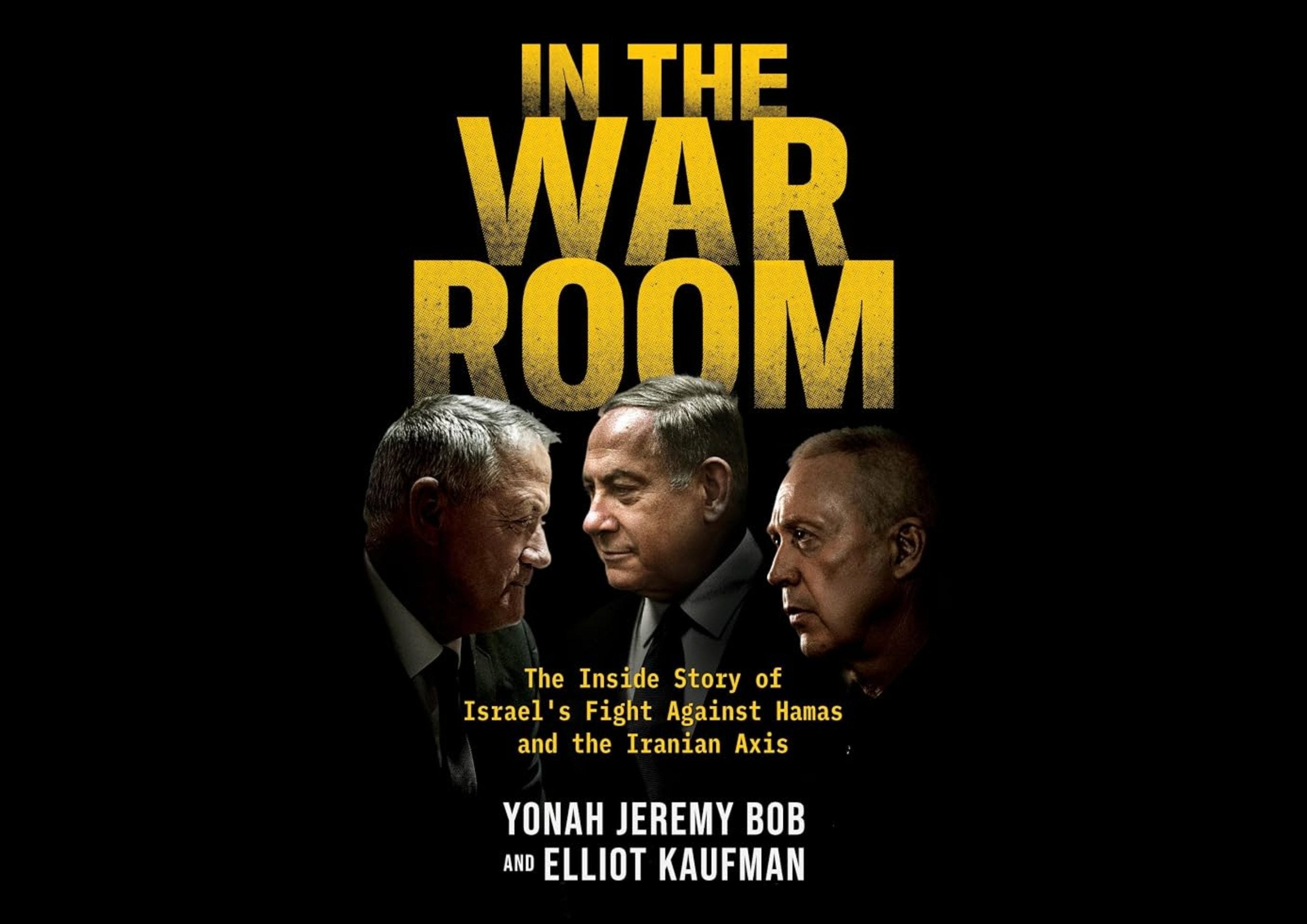
“This was not just the proverbial ‘team of rivals.’ It was a team of political enemies with little personal connection or camaraderie and deep suspicion of one another—cats in a bag. That they managed to lead such a successful multifront war is remarkable. As the authors tell it, the atmosphere in the war room was deeply unpleasant—though certainly better than the one between General Omar Bradley and Field Marshal Bernard Montgomery, who tried not to be in the same room together.
“The authors trace the crucial decision points of the wars and the debates that preceded them. At every stage, there were marked disagreements about how to handle an exceedingly complex situation. Drawing on firsthand testimony, the authors paint a picture of the shock and disorientation of the war’s first days, as Israel’s leaders struggled to grasp a situation for which they bore command responsibility. Throughout, some members of the war cabinet favored offensive pushes while others urged caution—though who played which role changed from battle to battle, and even within a single battle.
“For example, Gallant favored an immediate attack on Hezbollah in Lebanon to neutralize what was then its massive missile arsenal, which posed the greater strategic threat—even though Hezbollah had joined Hamas’s assault only in a limited way. Netanyahu favored dealing first with Hamas and the hostages, the immediate casus belli. Later, Netanyahu would be cautious about launching the ground operation in Gaza, as well as about taking Rafah in the south of the Strip, while his generals favored both operations. Over time, however, Gantz grew more skittish about the Rafah campaign, and Netanyahu more determined to carry it out.
“Even after the fact, the participants’ recollections differ—several remember the other participants as shaken in the first weeks of the war, but not themselves. Strategic disagreements are almost certainly inevitable in making such high-stakes decisions, and it is difficult to weigh these internal battles in hindsight. While most of the war room figures were politicians to some extent, there does not appear to be any clear correlation between their political leanings and how aggressively they wanted to prosecute the war. Whatever their failings in anticipating and understanding the enemy, these were patriots determined to defeat a genocidal foe.”

Speaking of America and Israel—and the supposedly nefarious relationship between the two—Ira Stoll returns to the Weekend Beacon with a review of Israel’s Lobby: America in the Grip of a Foreign Power by Eli Clifton and Ian Lustick.
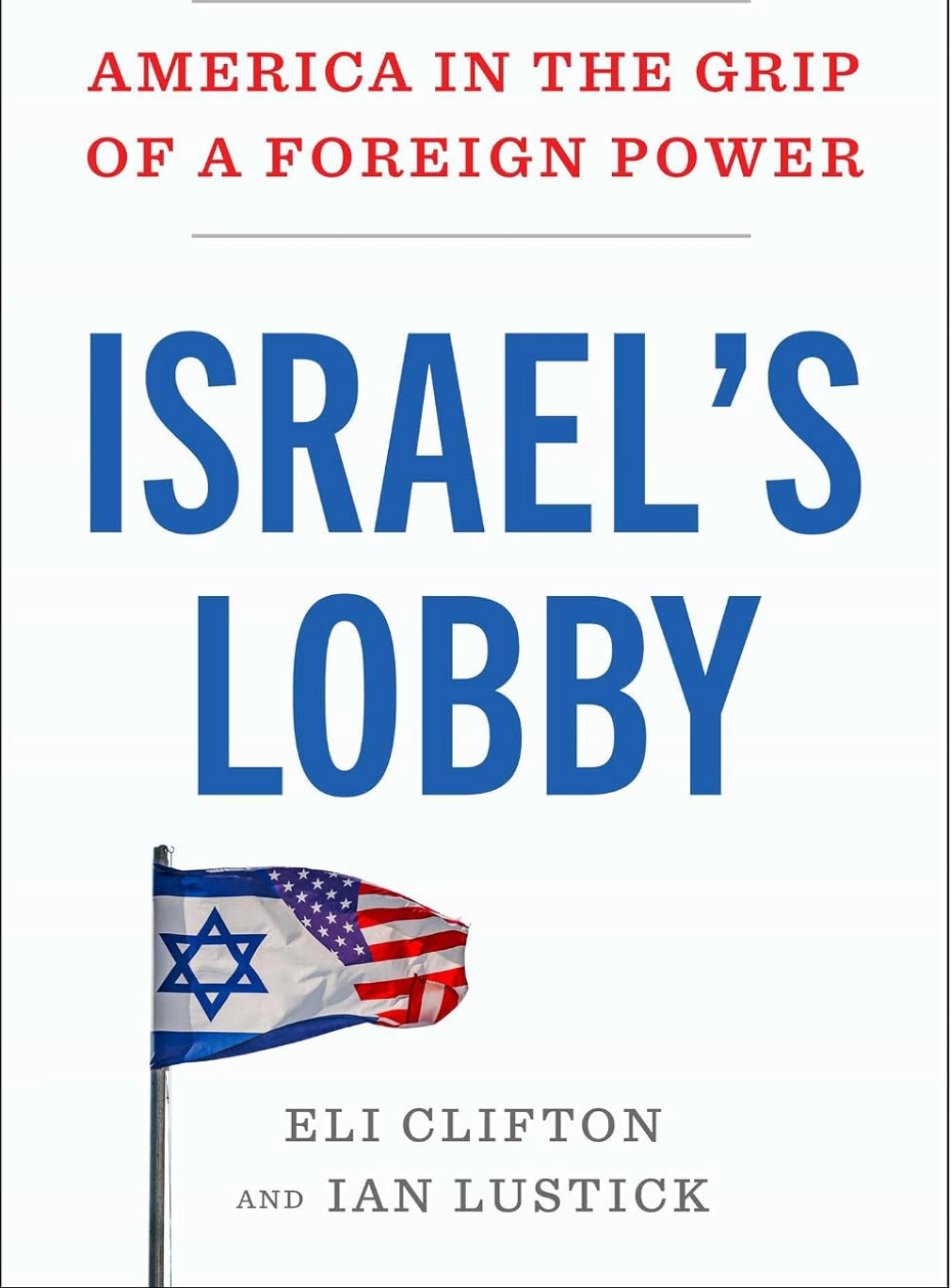
“Israel’s Lobby ... is so repellantly disgusting that it left me not only sick to my stomach but feeling frequently, also, like I needed to put it down and go wash my hands thoroughly with soap and water.
“The author Dara Horn has famously, and accurately, defined antisemitism as a lie. This book demonstrates the truth of that analysis. The book is full of lies, small and big and starting with the title itself, which falsely defines Americans who support a strong U.S.-Israel relationship as agents of the ally rather than as loyal Americans.
“Beyond the title and the core argument are a cesspool of inaccuracies. I counted dozens of them, so many that if the work had been produced in an academic context or with federal funding rather than commercially, there’d be a plausible case for research misconduct.”
“The book describes Sheldon and Miriam Adelson as ‘the largest donors by far’ in the 2012 election cycle and says they spent $92 million. Actually, a Koch network spent $122 million in 2012, according to the New York Times. There are 15 references to the Adelson family in the index of the book, some covering multiple pages, and no mentions of Koch or of George Soros or of the Rockefeller Brothers Fund, which pour significant sums into anti-Israel causes.”
“The book claims, ‘It is Israeli violence against Palestinians that increases antisemitism.’ That ignores that antisemitism peaked during the Spanish Inquisition and the Holocaust, before there was a modern state of Israel or ‘Palestinians’ with a national identity. It also blames the victims of a hateful bias for a bias that is fundamentally irrational. Israel has tried plenty of nonviolent ways of dealing with the Palestinians—a border fence, unilateral withdrawal from Gaza, Iron Dome, the Oslo Accords. Yet when faced with dedicated Islamist fanatical terrorists determined to wipe Israel off the map and rape, kill, or kidnap the Jewish inhabitants, the demand that Israel restrict its responses to nonviolent ones seems more a symptom of antisemitism than an indication of concern about fueling it.”
The real question is who is funding this book. Ira has the goods!

You know who else has the goods? Tunku Varadarajan. He reviews 1453: The Conquest and Tragedy of Constantinople by Anthony Kaldellis.
“As Kaldellis tells us, Constantinople had been—at the time of its capture by the Muslim Turks—the capital of ‘the east Roman polity’ and a center of Greek scholarship and Orthodox Christianity for over a millennium. In the first half of the 15th century, it was still ‘one of the most visited places on earth.’ Why did visitors come? Kaldellis lists the reasons: ‘trade, pilgrimage, diplomacy, espionage, exploration, and classical study.’ But thanks to various ravages—the Fourth Crusade, when crusaders torched the city; and terrible bouts of plague, especially in 1347, when a third of the populace perished—the population of Constantinople in 1453 was but a tenth of its historical peak.
“The terminology Kaldellis uses in his book, while confusing at first, is faithful to the way the Constantinopolitans saw themselves and the world. They called themselves ‘Roman’—and so does the author, although the Western Europeans called them Greeks. To differentiate these Greek-speaking, Orthodox Christians from the Christians to their west, he refers to the latter as ‘Latins,’ since those people used the Latin rite in their (Roman Catholic) churches.
“That much settled, Kaldellis tells his story, which is that of a once-wondrous place that was, by 1453, ‘visibly in decline.’ Although its basileus (or emperor, the closest, least inaccurate English synonym) Konstantinos XI Palaiologos ruled almost no territory, its people ‘proudly clung to their heritage and foundations.’ Those, Kaldellis writes, ‘came to an end on that May day’ in 1453, ‘a day of tragedy and triumph’—tragedy for the residents and their civilization, and triumph for Sultan Mehmed II, who had begun his siege in September of the year preceding.
“The lesson Kaldellis wants us to imbibe—for which he draws from eyewitness accounts in Latin, Italian, Greek, Russian, and Turkish—is that Constantinople’s fall to the Turks wasn’t (as most modern accounts would have us believe) preordained or inevitable. The city’s defense was not ‘ineffectual,’ ‘futile,’ or ‘doomed to fail,’ with Konstantinos and his men only going through the motions of resistance in a fatalistic, oriental manner. ‘Konstantinos XI did not choose to resist the sultan because he wanted to die fighting,’ Kaldellis tells us. He almost won. He and his men ‘managed to counter all the sultan’s assaults and stratagems until the very last day.’ This doesn’t only rescue his reputation from one of fruitless or suicidal heroism, but also elevates Mehmed II, offering ‘a testament to his tenacity, determination, and strategy.’ The defenders ‘made Mehmed work for the prize, and he rose to the occasion.’”

Amid the High Holy Days, Jessica Schwalb has a fitting review of Michelle Friedman's Divine Corners: In the Shadow of the Holocaust on a Catskills Chicken Farm.

“[Friedman’s] memoir chronicles her upbringing in the hamlet of Divine Corners as the child of Polish Holocaust survivors, both of whom witnessed the Warsaw Ghetto. Friedman animates each character with their skill for inflicting pain, unpacking decades of trauma in a household where sentimentality was shunned.
“The passing of her abusive father, Arnold, who ‘crackled with tension like the electrified wire cattle fences,’ but also saved his sister and mother after persuading a Polish woman to hide them in her attic after the Nazi occupation, ‘liberated [her] curiosity’ to hunt for the origin of her family’s troubles and the higher familial dynamics that dictated her childhood.
“Arnold’s rage pervaded Friedman’s house. And once his beatings began, any intervention was ‘like gasoline thrown to a fire.’ Her mother, Regina, watched motionless, while her youngest and only son, Jay, endured his lashings. ... But divorce would have separated Regina from the one person who kept her past alive; everyone else she knew had been killed. Arnold could describe ‘the smell of the countryside’ and ‘the local landmarks’ in Wegrow, Regina’s hometown where her husband had briefly lived. To Regina, that may have been enough of a reason to stay. Few others would understand.”

With school back in session, I can't think of a better time to give Back to School, the Rodney Dangerfield comedy from 1986, the respect it deserves.

“The premise of the old man returning to college wasn’t new. Just the year before, Disney aired a made-for-TV movie, The Undergrads, starring Art Carney. Bing Crosby had done it in Blake Edwards’s High Time (1960), including the subplot of falling in love with the teacher. The difference is while Bing sang (’The Second Time Around’), Rodney was a bit more direct. To a woman at the bookstore: ‘I’d like to tame your shrew.’ Describing his awful second wife Vanessa, he says, ‘She gives good headache.’ Back to School is not for the woke of heart.
“In fact, a trigger warning may be in order: When a female student tells Thornton her favorite subject is poetry, he replies, ‘Maybe you can straighten out my Longfellow.’ His chain of department stores is called Tall & Fat. Needless to say, the jokes target the fat (’When you go to the zoo, do the elephants throw you peanuts?’). And when he looks for his son in a sorority house—mistaking it for a fraternity—he walks into a shower, pulls open a curtain, and asks, ‘Have you seen Jason?’ A naked nubile coed screams. He shuts the curtain, then opens it briefly, eyes agog, adding, ‘You’re perfect.’
“Speaking of eyes agog, Rodney Dangerfield is not the most obvious leading man (in a year that featured leading men Tom Cruise and Rob Lowe). He was 64 at the time but, as Jay Nordlinger noted in his review of Nothin’ Comes Easy, Dangerfield didn’t make it big until his appearance on The Ed Sullivan Show, when he was 45. Then came regular stints on The Tonight Show, countless comedy club acts, and Caddyshack in 1980, which catapulted him to Hollywood stardom. Except the follow-on movie, Easy Money (1983) was both a critical and commercial flop. Thankfully Orion Pictures was willing to give Dangerfield another shot. It paid off—Back to School finished the year with $91 million, edging out James Cameron’s Aliens.”

Happy Sunday.
Vic Matus
Arts & Culture Editor
Washington Free Beacon